From Roots to Recipes
This cookbook exists because our ancestors refused to disappear.
Colonization attempted more than territorial conquest. It attempted erasure of language, ritual, land stewardship, spiritual systems, and kinship structures. It severed people from the soil. It criminalized the ceremony. It renamed the ingredients. It rewrote geography.
But it could not extinguish knowledge carried in the body.
African culinary customs survived the Middle Passage, plantation economies, missionary rule, forced migration, and economic displacement because they were portable. Techniques lived in muscle memory. Spice ratios were stored in instinct. Seeds were hidden in braids, pockets, and hems. Fire became a classroom. The kitchen became an archive.
Under colonization, cooking became a strategy.
Communal meals preserved social structure when family systems were fragmented. Shared pots maintained dignity when rations were meager. Adaptation turned scarcity into innovation. What was dismissed as “peasant food” became architecture for endurance.
Food became both shield and signal.
It encoded ancestry when names were stripped. It preserved agricultural science despite the theft of land. It carried flavor memory across oceans and generations. What empire tried to standardize, the kitchen diversified.
These meals are familial because survival required interdependence.
They are communal because isolation was imposed.
They are celebratory because joy became resistance.
They are empathic because care was the currency that endured.
From Roots to Recipes honors the culinary intelligence that outlived empire. It recognizes African foodways not as relics of the past, but as living systems of resilience — systems that fed bodies, stabilized communities, and kept memory intact when everything else was under assault.
To cook these recipes is not nostalgia.
It is a continuation.
From Roots to Recipes
This cookbook exists because our ancestors refused to disappear.
Colonization attempted more than territorial conquest. It attempted erasure of language, ritual, land stewardship, spiritual systems, and kinship structures. It severed people from the soil. It criminalized the ceremony. It renamed the ingredients. It rewrote geography.
But it could not extinguish knowledge carried in the body.
African culinary customs survived the Middle Passage, plantation economies, missionary rule, forced migration, and economic displacement because they were portable. Techniques lived in muscle memory. Spice ratios were stored in instinct. Seeds were hidden in braids, pockets, and hems. Fire became a classroom. The kitchen became an archive.
Under colonization, cooking became a strategy.
Communal meals preserved social structure when family systems were fragmented. Shared pots maintained dignity when rations were meager. Adaptation turned scarcity into innovation. What was dismissed as “peasant food” became architecture for endurance.
Food became both shield and signal.
It encoded ancestry when names were stripped. It preserved agricultural science despite the theft of land. It carried flavor memory across oceans and generations. What empire tried to standardize, the kitchen diversified.
These meals are familial because survival required interdependence.
They are communal because isolation was imposed.
They are celebratory because joy became resistance.
They are empathic because care was the currency that endured.
From Roots to Recipes honors the culinary intelligence that outlived empire. It recognizes African foodways not as relics of the past, but as living systems of resilience — systems that fed bodies, stabilized communities, and kept memory intact when everything else was under assault.
To cook these recipes is not nostalgia.
It is a continuation.

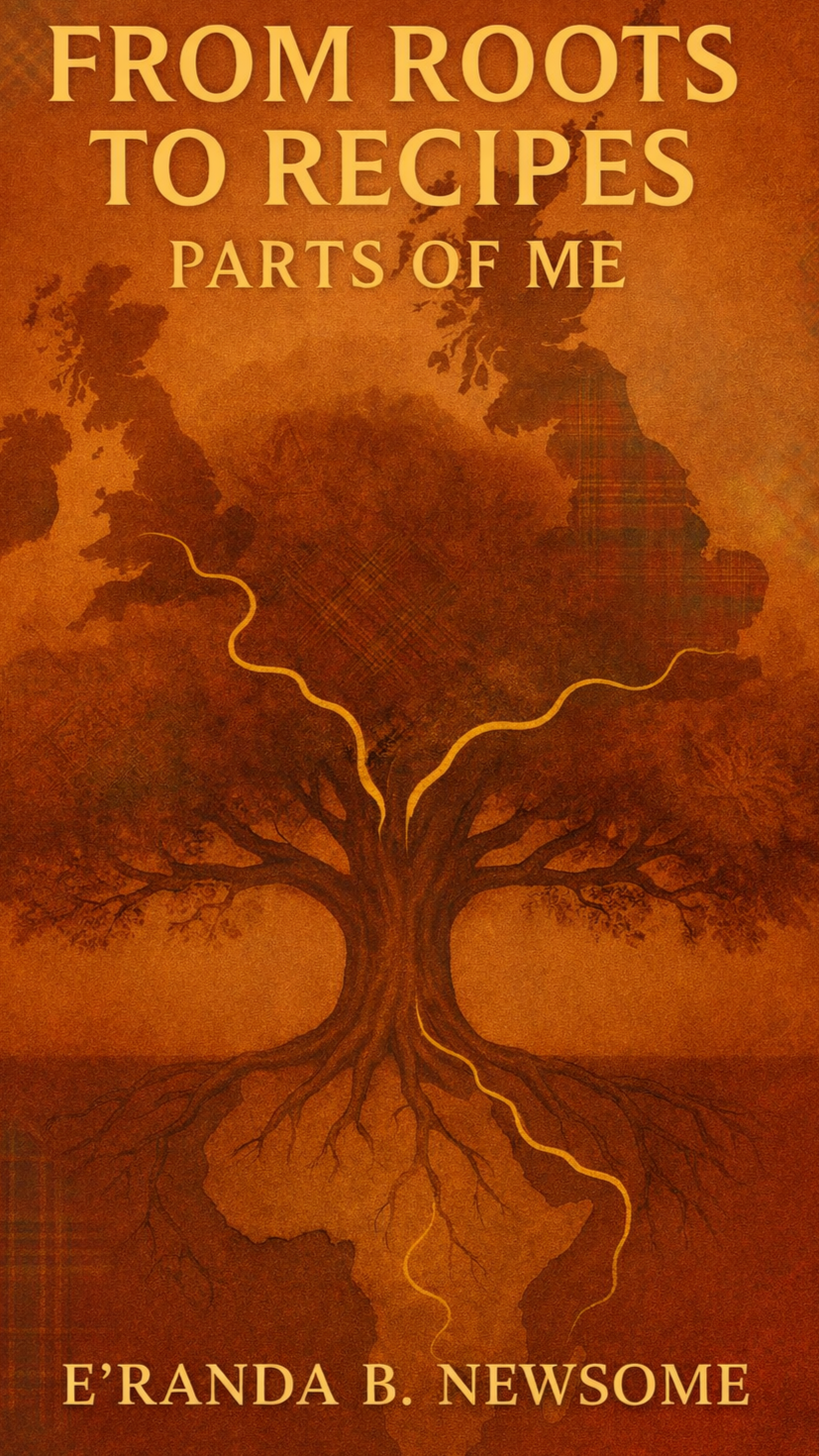 Image 1 of 1